
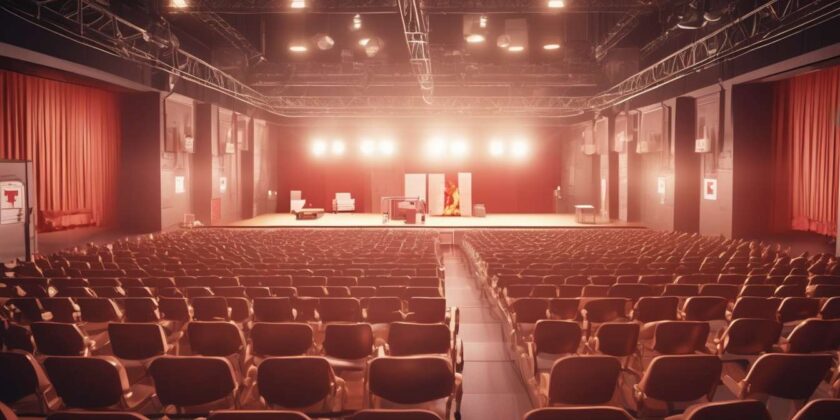
Holding venues accountable is not optional; it is the foundation of sustainable, ethical live dance enterprises we are building together.
We insist that safety standards be treated as core programming, not an afterthought, because the artistry that fills our stages depends on the trust we cultivate with performers, staff, and audiences.
We negotiate contracts, design schedules, and create atmospheres that prioritize dignity and security, recognizing that a single lapse can reverberate through careers and communities.
We commit to transparent inspections, equitable access, and responsive incident reporting, understanding that rigor and compassion are complementary.
We invest in training, accessible facilities, and clear communication so that artists can focus on craft rather than hazard.
We embrace continuous improvement by:
- Auditing procedures regularly.
- Incorporating feedback from performers and staff.
- Adapting to evolving best practices.
By centering comprehensive venue safety standards, we protect bodies and livelihoods, elevate artistic excellence, and model responsible stewardship for the broader live events ecosystem.
Risk Assessment Protocols
We start by systematically identifying and prioritizing potential hazards in and around the venue.
- Map traffic flow (pedestrian and vehicle).
- Inspect rigging, flooring, and structural elements.
- Check lighting and sound equipment for faults and secure mounting.
- Note crowding points and egress bottlenecks.
We include performer risk assessment as a core task, documenting physical demands, proximity to hazards, and special equipment needs.
- Record each performer’s movement patterns and stage positioning.
- Note proximity to hot lights, trapdoors, edges, or pyrotechnics.
- Document any special equipment (props, harnesses, instruments) and related risks.
We assign likelihood and severity scores, then translate those into clear mitigation steps teams can adopt.
- Use a simple risk matrix (e.g., 1–5 likelihood × 1–5 severity).
- Prioritize high-likelihood/high-severity items for immediate action.
- Produce concise mitigation actions per risk (remove, control, PPE, signage).
We integrate emergency response planning into assessments, ensuring routes, communication methods, and role assignments are tested and understood.
- Define primary and secondary evacuation routes and assembly points.
- Establish communication methods (radios, PA announcements, visual signals).
- Assign and train staff/performer roles (wardens, first-aiders, incident coordinator).
- Run tabletop exercises and full drills to validate plans.
We keep records, schedule regular rechecks, and update protocols after incidents or changes.
- Maintain documented risk registers and inspection logs.
- Schedule periodic re-inspections (pre-show, daily, weekly as appropriate).
- Log incidents, near-misses, and corrective actions; review after events.
We share responsibilities and make evaluation transparent to build trust and inclusion.
- Publish clear ownership for each mitigations item.
- Invite performer and staff input during assessments and debriefs.
- Communicate changes and rationale openly so safety is an ongoing, inclusive practice rather than a one-time checklist.
Performer Safety Policies
Policy purpose and scope:
We’ll establish clear, enforceable performer safety policies that define responsibilities, required training, permitted equipment, and protocols for rehearsals and shows. These policies will outline expectations so everyone feels included and accountable, reinforcing that venue safety is a shared responsibility.
Performer risk assessments:
We’ll require documented performer risk assessment before new pieces or stunts.
- Performers and staff will jointly sign off on identified hazards and mitigation steps.
- Risk assessments will be reviewed and archived for reference before subsequent performances.
Role-specific training requirements:
We’ll mandate role-specific training so each person knows what to do when something goes wrong.
- Core topics: first aid basics, safe lift techniques, site-specific emergency response drills.
- Verification: training completion will be documented and periodically refreshed.
Equipment standards and inspections:
We’ll list permitted equipment, inspection schedules, and reporting procedures for damaged gear.
- Permitted gear must meet defined safety criteria.
- Inspection schedule: routine pre-show and periodic in-depth checks.
- Reporting: damaged or suspect gear is removed from service and logged immediately.
Rehearsal limits and fatigue management:
We’ll set rehearsal limits and cooldown protocols to reduce fatigue-related incidents.
- Limits: maximum rehearsal durations and mandatory breaks.
- Cooldowns: progressive cooldown routines and rest periods after intense sequences.
- Open communication: channels for performers to flag concerns without fear of retaliation.
Incident management and continuous improvement:
We’ll enforce incident documentation, debriefs, and revised controls after near-misses.
- Document incident or near-miss promptly.
- Conduct a structured debrief with performers and staff.
- Update risk controls and training as needed, and communicate changes to all stakeholders.
Culture and transparency:
By keeping policies transparent and participatory, we’ll build trust, improve safety outcomes, and make our venue a place where performers belong and can thrive.
Accessible Infrastructure
We ensure our facility’s layout, entrances, seating, restrooms, and backstage areas are fully accessible and maintained so all performers and patrons can move safely and independently.
We design clear routes, non-slip floors, ramps, elevators, and signage that respect varied mobility, vision, and sensory needs.
We provide adjustable seating and sightlines so everyone feels included during performances.
We integrate accessible dressing rooms, grab bars, and transfer spaces backstage, and we keep lighting and acoustics adaptable for sensory comfort.
We document accessibility features in our venue safety materials and share them proactively with performers and audiences so expectations are clear.
We coordinate accessible considerations with performer risk assessment processes, ensuring individual needs are matched to space and rigging.
We train staff to assist respectfully and consistently, and we maintain equipment and routes through scheduled inspections.
We ensure that accessible exits, alarm signals, and evacuation aids are always functional and unobstructed, reinforcing confidence and belonging for everyone who enters our venue.
Emergency Response Plans
We will maintain clear, practiced emergency response plans that assign roles, outline actions for different hazards, and ensure everyone on-site can evacuate or shelter safely.
We create a single, shared document that ties venue safety to performer risk assessment findings, so our emergency response matches specific stage layouts, rigging, and crowd dynamics.
We map exits, safe assembly points, and medical stations, and we designate leaders for communication, crowd flow, and first aid during incidents.
We include procedures for common scenarios and simple decision trees to keep choices clear under pressure.
- Fire
- Medical emergency
- Structural concern
- Severe weather
We coordinate with local emergency services and share contact protocols so responders know our space and needs.
We provide clear signage, accessible routes, and contingency measures for guests and performers with mobility differences, reinforcing that everyone belongs and is protected.
We review and update the plan after events and incidents, incorporating lessons from performer risk assessment and team feedback to keep our venue safety practices practical and trustworthy.
Staff Training Programs
We’ll train all staff and volunteers on their specific safety responsibilities, incident protocols, and the skills needed to carry them out reliably during events.
Training modules will be concise and cover:
- venue safety fundamentals
- crowd management
- basic first aid
- role-specific tasks
Training delivery will include:
- guided walkthroughs of the performance space
- hands-on practice with equipment
- drills tied to our emergency response plans
- the goal that responses become muscle memory, not improvisation
We’ll teach staff to support performers through a clear performer risk assessment process.
Key elements of performer support:
- recognizing fatigue, unsafe props, or staging hazards
- communicating concerns without judgment
- running regular refresher sessions and paired mentoring
- providing accessible materials in multiple formats to meet diverse learning needs
We’ll track competencies and provide targeted coaching where gaps appear.
Implementation steps:
- Record baseline competencies for each role.
- Schedule regular refresher and mentoring sessions.
- Offer targeted coaching when assessments show gaps.
- Celebrate progress to build team trust and morale.
The outcome: By standardizing expectations and practicing together, we’ll maintain consistent venue safety, strengthen our community, and ensure everyone — staff, volunteers, and performers — feels respected and prepared.
Incident Reporting Systems
Purpose: We’ll implement a clear, easy-to-use incident reporting system that captures timely details, assigns responsibility, and triggers appropriate follow-up actions.
Accessibility: We’ll make reporting accessible to staff, performers, and volunteers so everyone feels included in protecting venue safety.
What the forms collect:
- Objective facts (date, time, location, sequence of events)
- Witness statements
- Photos
- Preliminary performer risk assessment to guide next steps without assigning blame
Report routing and coordination: We’ll route reports to a designated safety lead who logs incidents, assigns corrective tasks, and coordinates with our emergency response plan when needed.
Timelines and accountability: We’ll set timelines for acknowledgement, investigation, and resolution so the community sees progress and accountability.
Review and learning:
- We’ll review reports in regular safety meetings.
- We’ll track trends.
- We’ll share lessons learned with the team to prevent recurrence.
Privacy and protections: We’ll protect privacy and encourage honest reporting by offering anonymous options and ensuring no retaliation.
Guiding principles: By centering transparency, shared responsibility, and continuous improvement, we’ll build trust across the venue and strengthen collective commitment to safer performances.
Contractual Safety Clauses
We will include clear contractual safety clauses in all performer and vendor agreements that assign responsibilities, set minimum standards, and outline remedies if requirements aren’t met.
We will spell out expectations for venue safety, required equipment, insurance, and who does what during load-in, performance, and strike.
We will require a performer risk assessment for acts with elevated hazard, and we will define timelines for submitting those assessments so everyone can plan together.
We will contractually mandate coordination with the venue’s emergency response plans, specifying notification chains, on-site first aid qualifications, and access routes for responders.
If partners fail to meet these clauses, remedies will range from corrective action plans to withholding payment or terminating agreements, applied fairly and transparently.
We will craft language that protects people and the shared creative space, and we will invite collaborators to discuss reasonable accommodations.
By embedding these clauses, we will strengthen trust, clarify accountability, and keep our community safer without chilling artistic expression.
Continuous Improvement Measures
We will regularly review incidents, near-misses, and feedback to update policies, training, and equipment so safety keeps improving over time.
We create a simple cycle:
- Collect data.
- Analyze trends.
- Adjust procedures.
- Communicate changes to everyone involved.
That cycle strengthens venue safety by turning experience into concrete action.
We involve performers, staff, and regulars in debriefs so voices feel heard and practical insights guide updates.
We use performer risk assessment outcomes to prioritize fixes, including:
- Modifying choreography space.
- Reinforcing lighting rigs.
- Revising load limits.
We run tabletop drills and live rehearsals to test emergency response plans, then revise checklists and training based on what actually worked.
We document every change, assign owners, and set review dates so improvements stick and everyone knows their role.
By sharing successes and lessons, we build a community committed to continuous improvement, where safety is a shared responsibility and belonging helps sustain safer, more inclusive shows.
How should a venue handle safety concerns raised by patrons who are intoxicated or under the influence, especially when it involves potential sexual harassment or aggression?
We should take reports seriously, act quickly, and prioritize care for the affected person.
We’ll separate the intoxicated patron, assess immediate danger, and involve trained staff or security to defuse the situation.
We’ll offer medical help, safe transportation, and a private space for the complainant.
We’ll document the incident, escort the aggressor out if needed, and involve police for serious threats.
We’ll follow up and review policies to prevent recurrence.
What legal liabilities do venue owners face if a performer or staff member is injured due to a subcontractor’s negligence (e.g., a third-party lighting or rigging company)?
Question: What liabilities do owners face if a performer or staffer is injured because a subcontractor was negligent?
Short answer: Owners can be held vicariously liable in some jurisdictions — especially when they exercised control over the subcontractor’s work, failed to properly vet contractors, or ignored known hazards. Liability is often shared with the subcontractor, and owners face indemnity claims and insurance disputes.
How liability can arise
-
Vicarious liability and control. If the owner exercised sufficient control over how the subcontractor performed the work, courts may treat the subcontractor as an agent or employee for the purposes of negligence claims.
-
Negligent hiring or failure to vet. Owners who fail to screen subcontractors for competence, licensing, or safety records can be directly liable for negligent hiring or supervision.
-
Premises liability and known hazards. If the owner knew (or should have known) about hazardous conditions and did not correct or warn about them, the owner can be directly liable for injuries occurring on the property.
Common legal and contractual consequences
-
Shared responsibility. Liability is often allocated between owner and subcontractor according to fault, so owners may share damages even if the subcontractor was primarily negligent.
-
Indemnity claims. Owners may be sued under contractual indemnity clauses (either seeking indemnity from the subcontractor or being sued by the subcontractor/performer depending on the contracts in place).
-
Insurance disputes. Injuries can trigger coverage issues: primary vs. secondary coverage, duty to defend disputes, and coverage denials if policy requirements (like naming the owner as an additional insured) were not met.
Practical risk-reduction measures
-
Document clear contracts.
- Require written scopes of work, safety responsibilities, and compliance with laws and industry standards.
-
Require indemnification and insurance.
- Obtain express indemnity clauses from subcontractors.
- Require adequate general liability, workers’ compensation, and, where appropriate, additional insured endorsements and waivers of subrogation.
-
Vet and approve subcontractors.
- Check licenses, safety records, references, and safety programs before engagement.
-
Proactively manage safety.
- Conduct site safety reviews, enforce safety plans, provide orientation for performers/staff, and address hazards promptly.
-
Maintain documentation.
- Keep records of vetting, contracts, safety inspections, incident reports, and communications about known hazards.
Bottom line: Owners are not automatically insulated from liability when a subcontractor is negligent. Control, vetting failures, and ignored hazards increase owner exposure. Robust contracts, insurance requirements, and active safety management materially reduce risk and improve the owner’s defense and recovery options.
How can venues balance enhanced safety measures (like bag checks or ID scanning) with patron privacy rights and local data-protection laws?
Goal: Balance stronger security checks with patrons’ privacy and data-law compliance.
Adopt a minimal-data policy.
- Collect only the data strictly necessary for safety screening.
- Avoid storing extraneous personal information.
Provide clear notice and obtain consent where required.
- Tell attendees what data is collected and why.
- Explain how long data will be retained and who can access it.
- Obtain explicit consent when local laws mandate it.
Limit retention and access.
- Keep retention periods short and predefined.
- Encrypt stored scans and data.
- Restrict access to a small, authorized group and log access events.
Train staff and offer alternatives.
- Train staff on privacy-preserving screening procedures and data-handling policies.
- Provide an alternative entry/check process for patrons who decline scans or opt out.
Review and align with local regulations.
- Regularly review applicable privacy and data-protection laws.
- Update procedures to maintain legal compliance without undermining trust.
Conclusion
You’ve built a safety-first framework that keeps performers, staff, and audiences protected while letting creativity thrive.
By doing thorough risk assessments, enforcing clear performer policies, maintaining accessible infrastructure, and training staff in emergency response and reporting, you reduce harm and liability.
Use contractual clauses to set expectations and keep improving through reviews and feedback.
Commit to these standards, and your venue won’t just host great shows — it’ll set the bar for responsible, sustainable live dance events.